

Before the United States had settled what Black military service would mean, Black soldiers were already helping decide whether the new nation would survive.
Black military service in the Revolutionary War
In 1778, Rhode Island organized the 1st Rhode Island Regiment as an integrated unit whose majority of soldiers were people of color. The regiment included free Black men and enslaved men. Rhode Island offered freedom to enslaved men who entered military service under the state’s enlistment plan. The promise tied military service to a claim larger than a battlefield assignment: a person who fought for independence could argue that he had earned the right to live free.
The regiment’s story belongs inside the larger history of Black participation in the Revolutionary War. Black Americans served in different roles across the conflict—as soldiers, laborers, drummers, fifers, cooks, and personal servants. Their experiences were not identical, and the language used by military records did not always match the language used today. Some served in integrated formations; others served in units organized around the racial assumptions of the period. In every case, the record challenges the idea that the Revolution was defended only by white men.
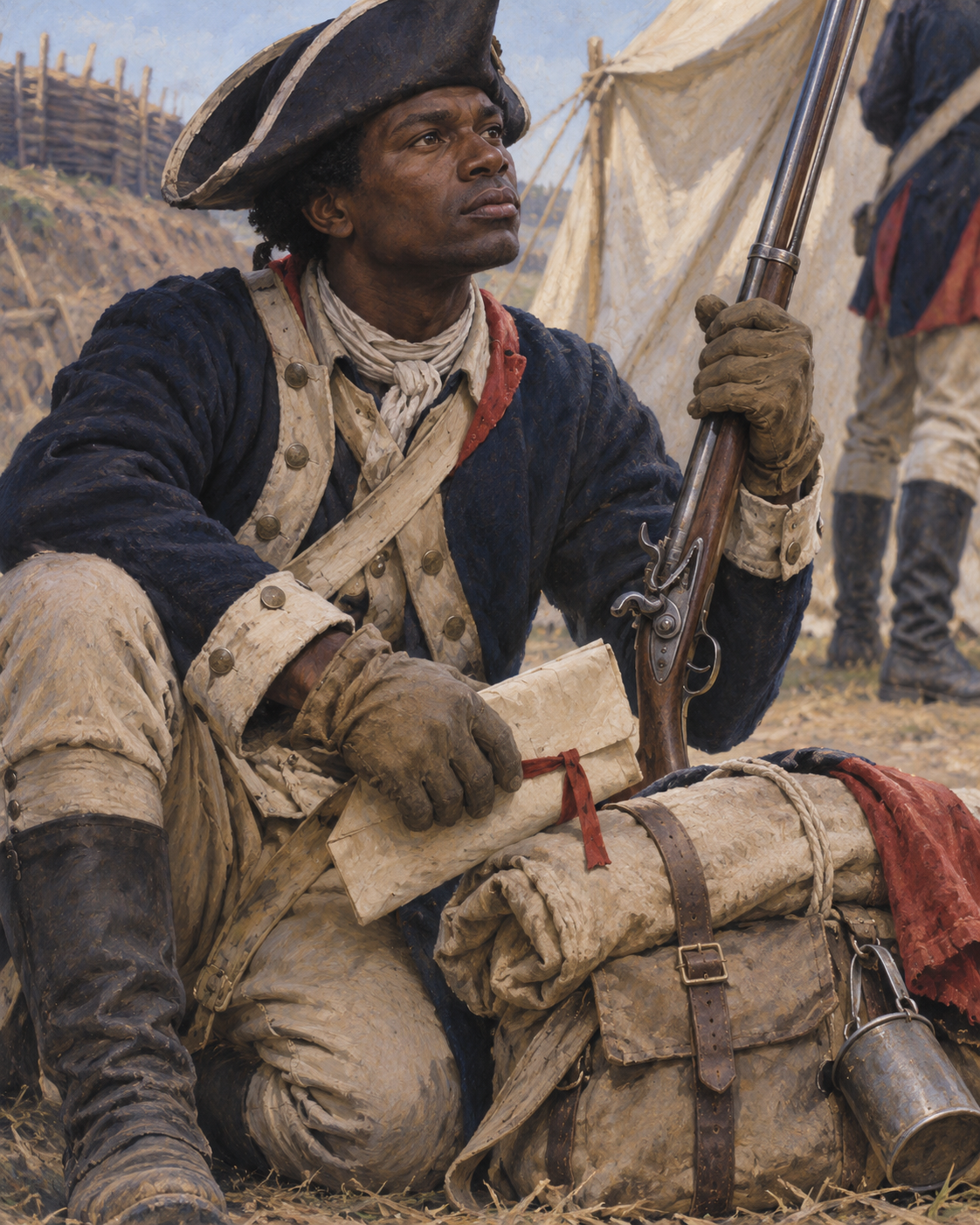
The 1st Rhode Island Regiment at Yorktown
The 1st Rhode Island Regiment served through the war in changing forms. The U.S. Army’s current historical account identifies the unit as an integrated regiment in which the majority of soldiers were people of color and notes that many enslaved soldiers gained freedom through military service. The unit also served through the siege of Yorktown, the campaign that ended with the British surrender in October 1781.
That service did not erase discrimination. Black soldiers could receive the same pay and rations as other soldiers while being denied officer commissions. Military service could create a claim to freedom, a pension, or public recognition, but it did not automatically create equal standing. The promise of liberty was real enough to shape lives—and limited enough to require continued struggle.
Freedom, recognition, and the word veteran
That tension is the reason this story still matters. The men of the 1st Rhode Island Regiment were not simply symbols placed in a patriotic story after the fact. They were people making decisions under pressure, carrying the risks of war, and asking what the new nation owed those who defended it. Their service makes freedom, citizenship, and recognition part of the same historical conversation.
The story also changes the way we understand the word “veteran.” Service is not only a moment of courage in uniform. It is also what happens afterward: whether a person is recognized, whether a promise is kept, whether a family can tell the story, and whether a community makes room for the people who served.