
HISTORY & MEMORY · NOVEMBER 10, 2026

Marcelite J. Harris: The Maintenance Officer Who Reached General

Her record turns maintenance into a leadership story: technical expertise, institutional scale, and access to command.

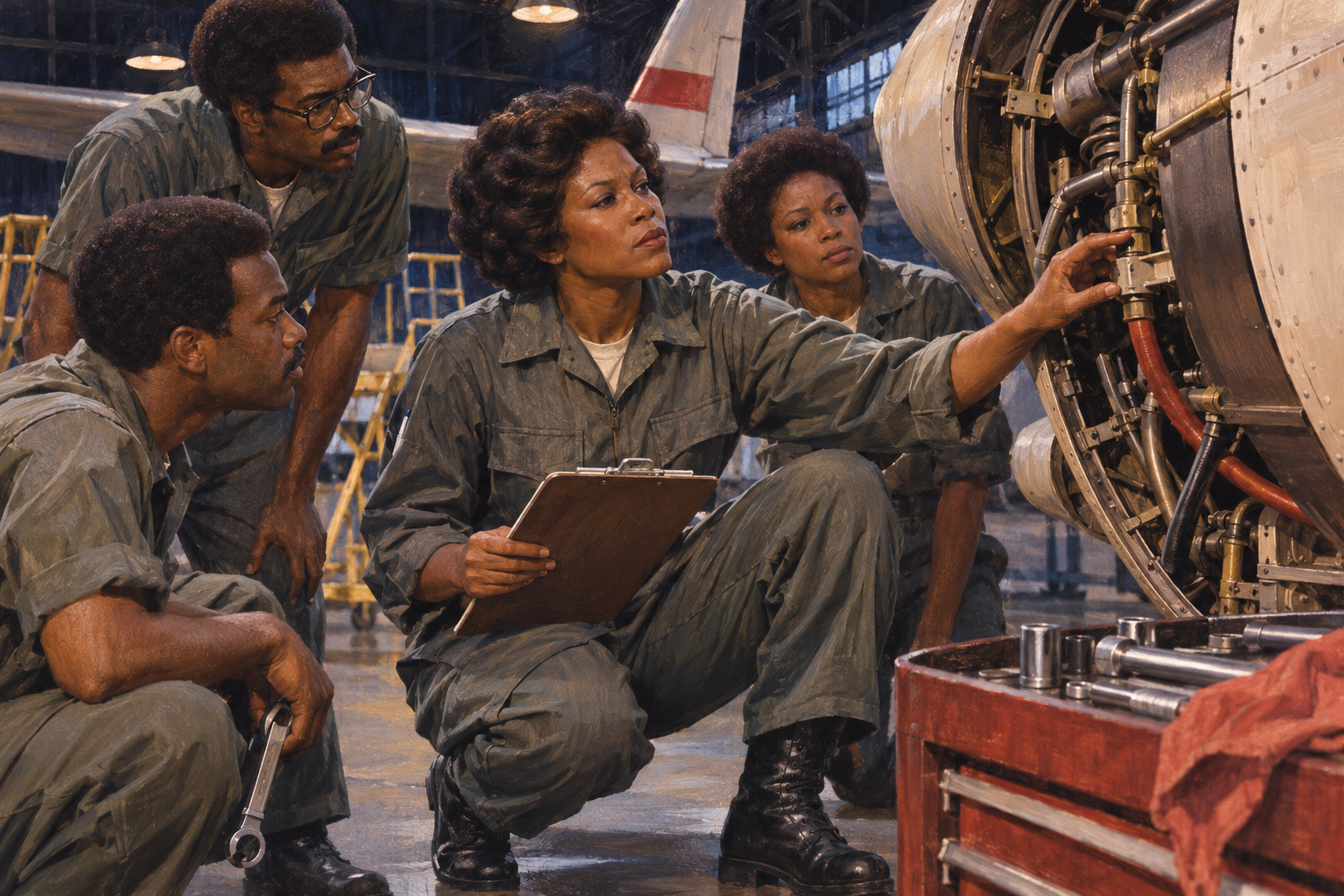
Editorial illustration honoring Marcelite J. Harris in an Air Force maintenance setting.
Generated editorial illustration for VHVATC’s history series. It is not an archival photograph or historical artifact.

Marcelite J. Harris’s story begins in the work that keeps aircraft ready and ends at a rank the Air Force had never before awarded to an African-American woman.

Maintenance is command

The official Air Force biography records that Marcelite J. Harris was commissioned through Officer Training School at Lackland Air Force Base on December 21, 1965. It identifies her as the first woman aircraft maintenance officer in the Air Force.

The biography also records that she became one of the first two women air officers commanding at the Air Force Academy and the first woman deputy commander for maintenance. These are technical and organizational milestones, not ceremonial titles: they describe who was trusted to keep complex systems and people ready.

A career measured at institutional scale

As director of maintenance at Air Force headquarters, Harris organized, trained, and equipped a workforce of more than 125,000 technicians and managers. The biography also describes her responsibility for maintenance policy and an annual budget of more than $20 billion.

Those figures show why maintenance is a leadership story. Readiness depends on systems, people, resources, and decisions that are often invisible until something fails. Harris’s career placed that work inside the public record of command.

A milestone in rank

The Air Force biography records Harris’s promotion to brigadier general effective May 1, 1991, and major general effective May 25, 1995. An official Air Force Test Center reference identifies her as the first African-American female general officer in the Air Force.

The biography was current as of September 1996, so readers should treat it as a historical career record rather than a current office listing. Its value is the path it preserves: technical work became command, and command widened the visible boundary of who could lead.

THEN · NOW · JOIN

Honor the record. Make the next step clearer.

This history stands on its own. The present-day work also deserves clear evidence, plain language, and a defined invitation.

THENThe historical record

Harris’s service connects technical excellence with institutional access: the work behind readiness can also open a path to historic command.

NOWVHVATC Today

VHVATC’s public pages describe present-day support for Veterans and their communities. Those pathways are offered separately from the Air Force career record.

JOINA reader’s choice

Read both Air Force sources, share the history of Black women in military leadership, and connect with VHVATC about current support or a defined collaboration.

SEE THE WORK BEFORE YOU FUND THE MISSION

Evidence should come before the ask.

NEED

The historical need was access to technical leadership and command for Black women in the Air Force.

WHAT THE RECORD SHOWS

The Air Force documents Harris’s maintenance firsts, headquarters responsibilities, promotions, and historic general-officer milestone.

WHERE & WHEN

Her recorded career begins with a 1965 commission and reaches major general in 1995; the biography was current as of September 1996.

EVIDENCE AVAILABLE

Two official Air Force sources are linked directly, including the biography and the reference identifying her milestone.

WHAT SUPPORT COULD MAKE POSSIBLE NEXT

VHVATC can turn public interest into a specific present-day conversation about Veteran support, skills, partnerships, and evidence.