
HISTORY & MEMORY · NOVEMBER 10, 2026

The Tuskegee Airmen: Skill, Service, and the Fight to Be Believed

Their achievement was not only that they flew. It was that they built a combat record inside a system that had been designed to doubt them.

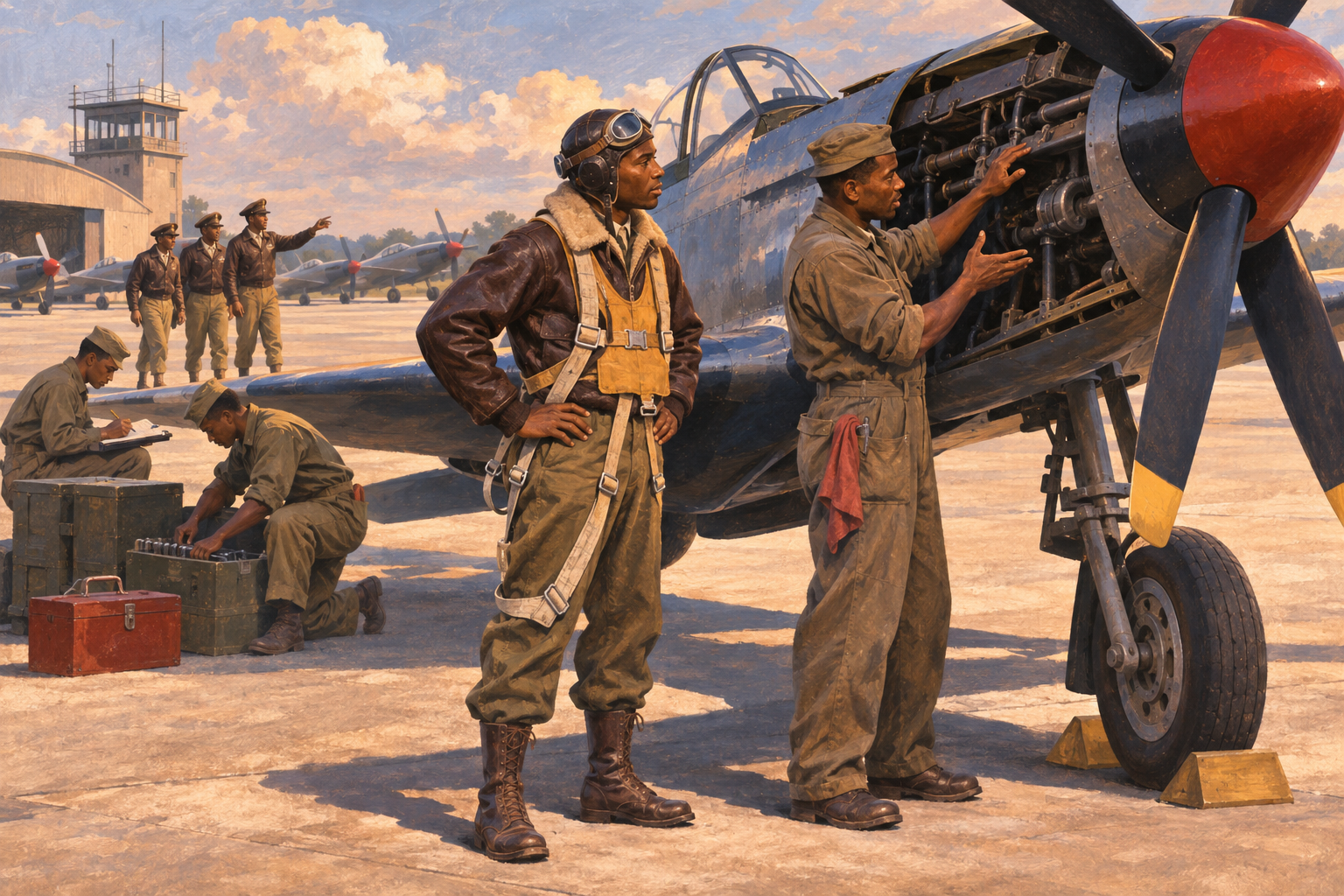
Editorial illustration honoring the Tuskegee Airmen and their aviation service.
Generated editorial illustration for VHVATC’s history series. It is not an archival photograph or historical artifact.

The Tuskegee Airmen changed aviation history by making skill visible where prejudice had declared it impossible.

Training a new premise

The U.S. Air Force records that the Tuskegee Army Flying School was established in July 1941. The first class of African-American aviation cadets began training that month, and the first five pilots graduated on March 7, 1942.

The Tuskegee Airmen were not only pilots. The Air Force describes a larger team that included navigators, bombardiers, and support staff. The history therefore belongs to an organization, not only to a handful of celebrated names.

Benjamin O. Davis Jr. and the 332nd

The 99th Fighter Squadron was activated in March 1941, and the 332nd Fighter Group was activated in October 1942 as the first all-African-American fighter group in history. In October 1943, Colonel Benjamin O. Davis Jr. took command of the 332nd, becoming the first African-American to command a fighter group.

Leadership had to be demonstrated inside combat operations and inside a military culture shaped by racial prejudice. Davis’s command made the demand for equal opportunity more concrete: it placed a Black officer at the center of a fighter group’s operational responsibility.

A record measured in sorties and change

The Air Force records that the 332nd Fighter Group flew more than 15,000 sorties and achieved 261 aerial victories during World War II. Its last mission was April 30, 1945, and the group was inactivated on October 19, 1945.

The record is both operational and institutional. The sorties and victories answer the battlefield question. The larger legacy answers the question of what happens when an institution is forced to confront the evidence of people it once treated as an exception.

THEN · NOW · JOIN

Honor the record. Make the next step clearer.

This history stands on its own. The present-day work also deserves clear evidence, plain language, and a defined invitation.

THENThe historical record

The Tuskegee Airmen’s service made a case through preparation, teamwork, combat performance, and leadership.

NOWVHVATC Today

VHVATC’s public pages describe support for Veterans and communities today. Those current service paths are distinct from the historical record of the Tuskegee Airmen.

JOINA reader’s choice

Read the Air Force source, teach the team-based history behind the famous name, and connect with VHVATC about collaboration or present-day Veteran support.

SEE THE WORK BEFORE YOU FUND THE MISSION

Evidence should come before the ask.

NEED

The historical need was equal opportunity to train, lead, and serve in military aviation.

WHAT THE RECORD SHOWS

The Air Force documents the school, graduating pilots, the 99th and 332nd units, Davis’s command, sorties, victories, and inactivation.

WHERE & WHEN

The story runs from Tuskegee in 1941 through World War II operations and the 332nd’s inactivation in 1945.

EVIDENCE AVAILABLE

The official Air Force feature is linked directly and supplies the article’s dates and figures.

WHAT SUPPORT COULD MAKE POSSIBLE NEXT

VHVATC can help readers move from admiration to a specific present-day action: inspect the work, bring a skill, partner, volunteer, or ask for support.